
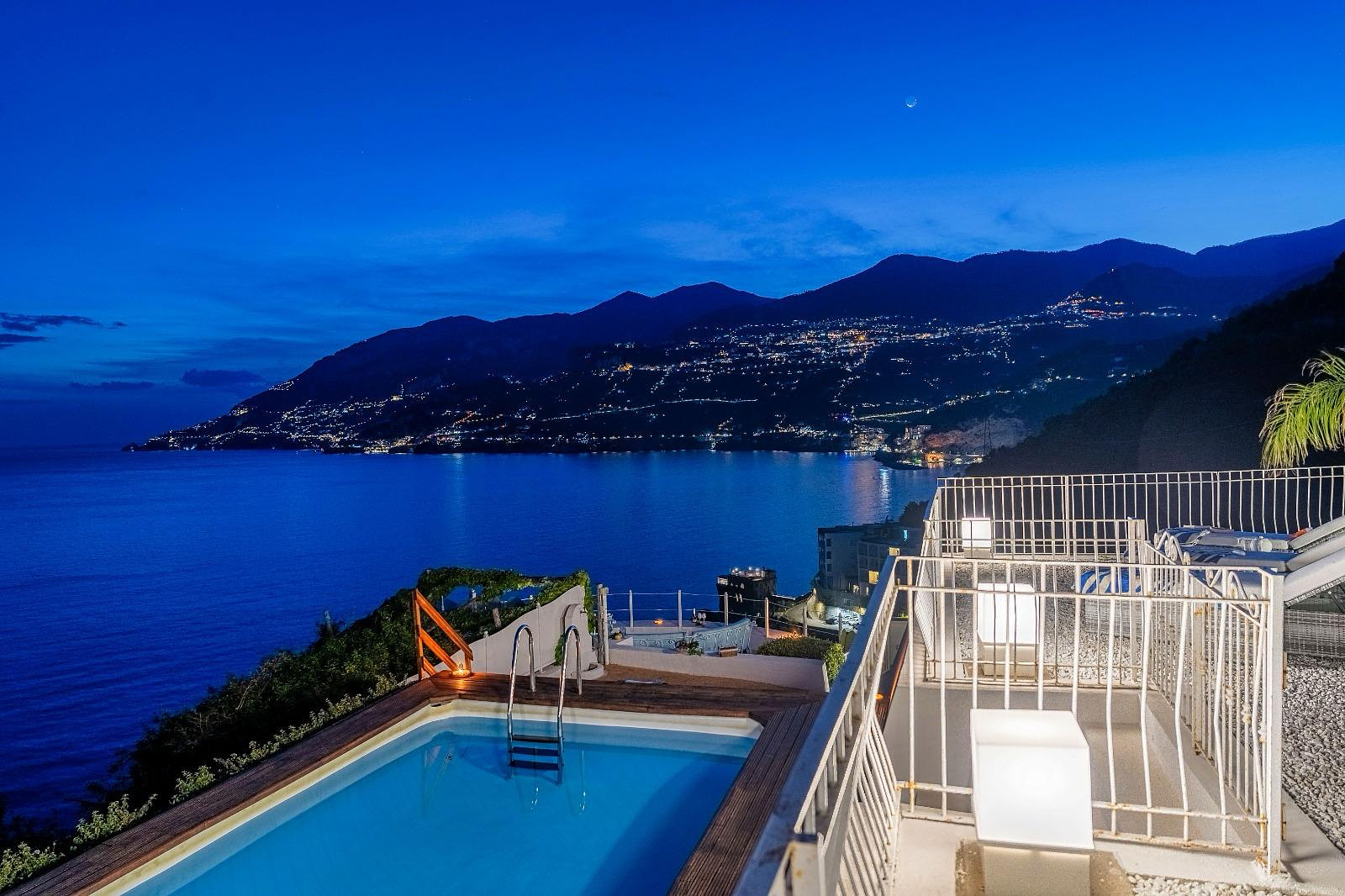

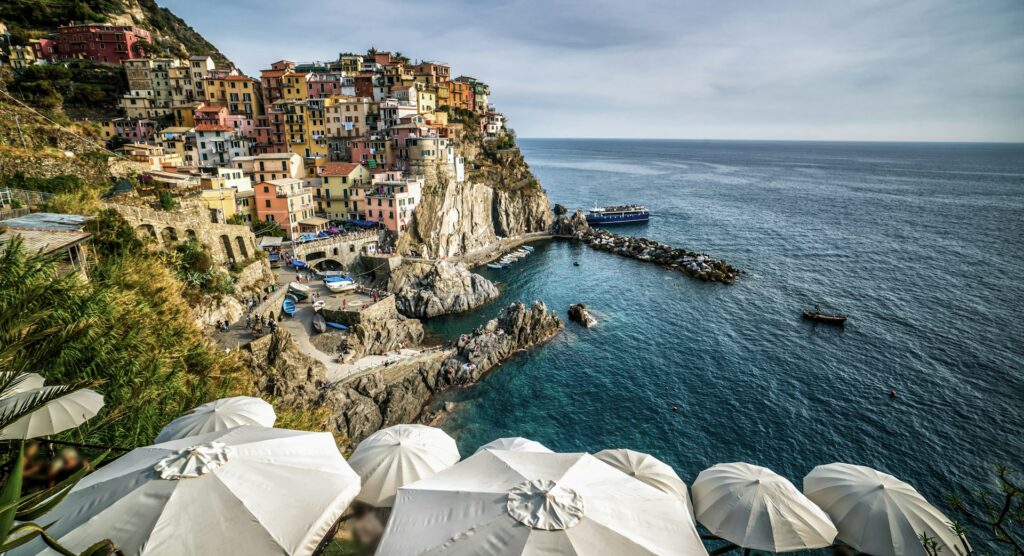
From the water, the Amalfi Coast looks almost impossible to walk. Mountains rise sharply from the Mediterranean, villages cling to rock faces and roads curl around cliffs high above the sea. But step away from the waterfront and another Amalfi Coast begins to appear. A stone staircase slips between two houses and keeps climbing. An old path disappears beneath lemon trees. A narrow lane leaves a village square and emerges minutes later above terraced gardens, with the sea suddenly spread out hundreds of feet below.
Walking here is not simply a way to exercise between sightseeing stops. It is one of the best ways to understand why the Amalfi Coast looks the way it does.
That history is visible under your feet. Dry-stone walls hold agricultural terraces against the slopes. Lemon groves appear above villages that seemed completely urban from below. A staircase that looks like a picturesque photo opportunity may once have been part of the practical route people used to move food, goods and themselves through the mountains.
The Amalfi Coast is famous for the view from the road. Walking lets you see the world that existed before the road.
The Path of the Gods: The Walk Everyone Talks About for Good Reason
There are famous hikes that become disappointing once their reputation gets too large. The Path of the Gods is not one of them.
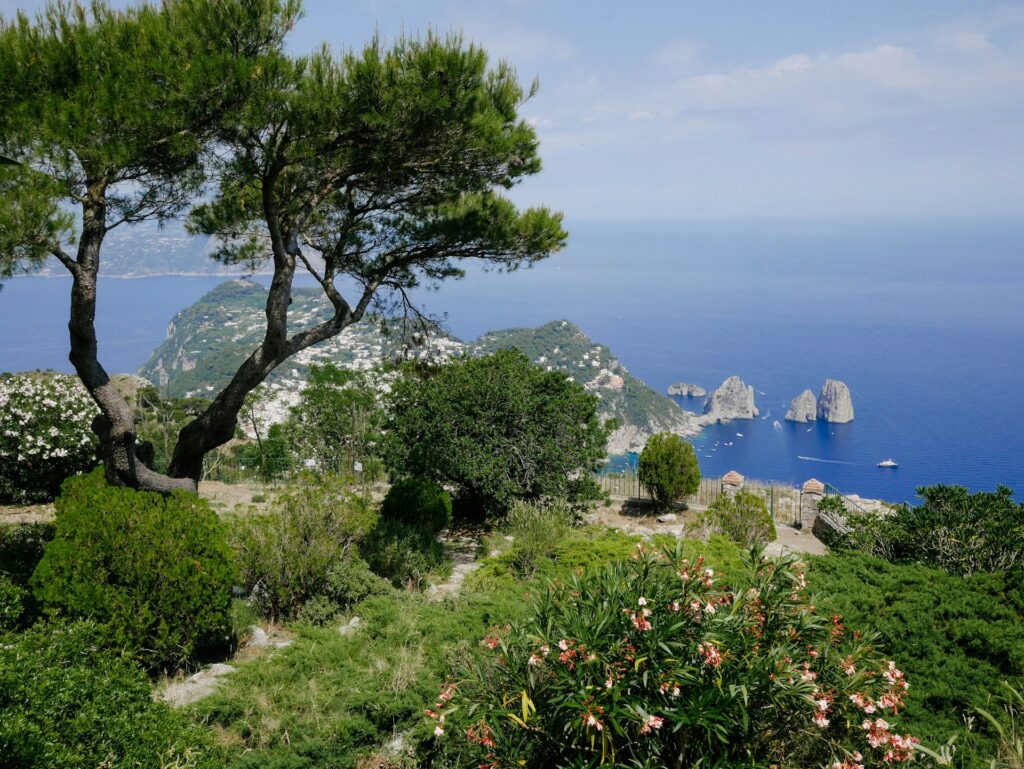
The classic Sentiero degli Dei route runs high along the mountains between Bomerano, a hamlet of Agerola, and Nocelle above Positano. Depending on the precise route and measuring point, guides put the walk at roughly six to eight kilometers, with the Bomerano-to-Nocelle direction generally preferred because the route trends downhill rather than requiring the corresponding climb.
But mileage does a poor job of describing this walk.
The defining experience is exposure to the scale of the landscape. For long stretches, the mountain falls toward a Mediterranean so far below that boats can look miniature. The coastline folds away toward Positano, and on clear days the view extends across the gulf toward the Sorrentine Peninsula and Capri. The path moves between rocky mountainside, Mediterranean vegetation and traces of the rural landscape that existed here long before hiking the Amalfi Coast became an international travel experience.
It is beautiful, but it should not be confused with a paved scenic promenade. Portions are rocky and uneven, and some stretches can feel exposed. Proper walking shoes matter. So does an honest assessment of how comfortable you are with heights. The classic walk itself may take roughly three hours, but transportation to the trailhead, stops for photographs and the descent or onward journey from Nocelle can turn it into a substantial part of the day.
Check Out: Day Trips to Vineyards on the Amalfi Coast
The reward is a perspective that cannot be duplicated from the coast road. Positano, in particular, looks completely different when approached from the mountains. Instead of arriving at street level surrounded by traffic and buildings, you see the town in context: a dense vertical settlement positioned between an enormous mountain system and the sea.
That alone explains why the Path of the Gods has become the coast’s signature walk.
The Lemon Path: Walking Through the Landscape That Built an Industry
The Sentiero dei Limoni between Maiori and Minori offers a different kind of beauty. There are Mediterranean views, but the real attraction is closer to the path.
You walk through the agricultural landscape.
The route passes through the terraced hillsides where lemons have long been cultivated above the coast. Stone walls create strips of usable earth on slopes that otherwise would have been extraordinarily difficult to farm. Wooden structures support and protect the citrus groves. Stairs climb between terraces, and the towns below periodically appear through openings in the landscape.
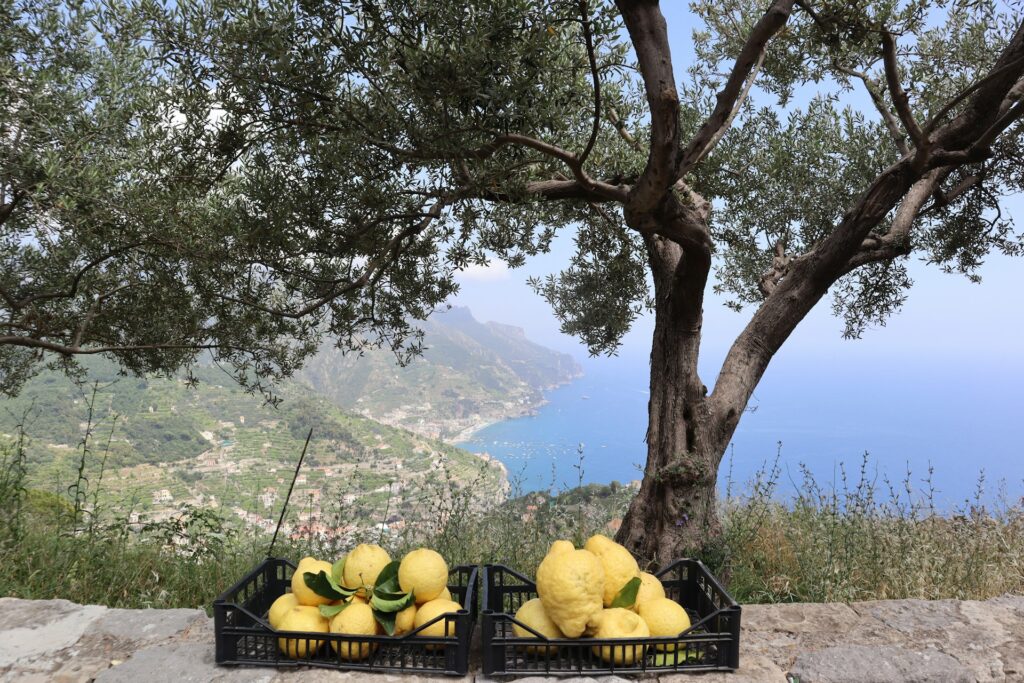
The municipality of Minori describes the path as an old route once traveled by the local women known as formichelle, who transported lemons in enormous baskets balanced on their heads. Accounts of the tradition describe loads reaching around 50 kilograms. That detail changes the experience of the walk. The stone steps cease to be charming remnants of another era and become evidence of physically demanding agricultural work.
The path traditionally begins near Santa Maria a Mare in Maiori and passes through the village of Torre on the way toward Minori. Along the route, lemon terraces share the landscape with olives, vines, Mediterranean vegetation and views toward the sea.
This is one of the walks that helps explain why UNESCO describes the Amalfi Coast as a cultural landscape rather than simply a beautiful coastline. Much of what visitors consider “natural” scenery is actually the result of centuries of people altering difficult terrain so they could live and farm on it.
The lemon terraces are gorgeous.
They are also infrastructure.
Valle delle Ferriere: The Amalfi Coast Turns Green
Begin walking inland from Amalfi and something unexpected happens. The blue-and-white palette of the coast begins disappearing.
Buildings thin out. The valley narrows. Water becomes more noticeable. Vegetation grows denser, and eventually the landscape feels remarkably removed from the bright, exposed coastline only a short distance away.
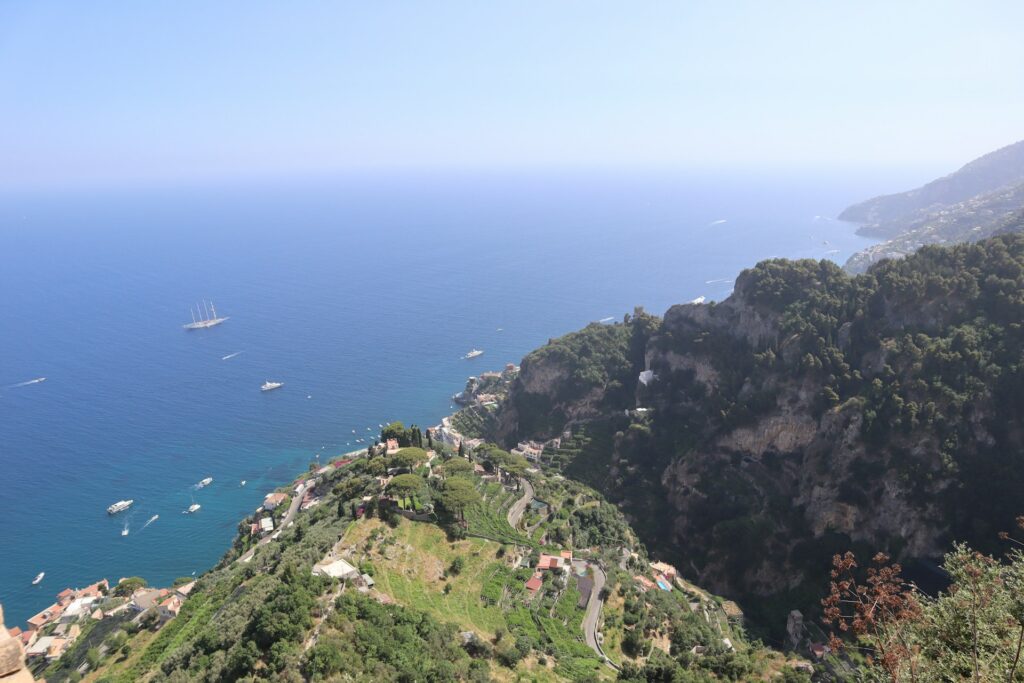
This is the Valle delle Ferriere, the valley behind Amalfi that contains one of the area’s most distinctive natural environments.
The valley is crossed by the Canneto stream and contains springs, waterfalls and unusually lush vegetation supported by its protected microclimate. It also preserves evidence of the industries that once used the valley’s water power, including old paper mills and ironworks. Amalfi’s official tourism information describes two principal approaches traced by the Italian Alpine Club: one beginning in Amalfi and another from Pontone.
The juxtaposition is what makes this walk so memorable. You can begin near one of Italy’s most recognizable Mediterranean waterfronts and find yourself walking beside water beneath dense vegetation within the same outing.
There is also a larger story hidden in the ruins. Amalfi’s historical importance was not created by scenery alone. Water flowing through this valley supplied energy for economic activity, including the paper-making tradition for which Amalfi became known. The abandoned structures along the route allow the natural and industrial histories of the valley to overlap.
This is the walk for someone who thinks the Amalfi Coast is all blazing sun, exposed cliffs and lemon trees.
It isn’t.
Ravello to Minori: Take the Stairs
Ravello is famous for looking down on the Amalfi Coast. Walking from Ravello toward Minori lets you experience exactly how high above it you have been.
The old pedestrian routes descend from the hilltop town through a landscape of terraces, houses, small roads and seemingly endless stone steps. The sea remains in view for portions of the descent, but the perspective keeps changing as you lose elevation and move from the mountain settlement toward the coast.
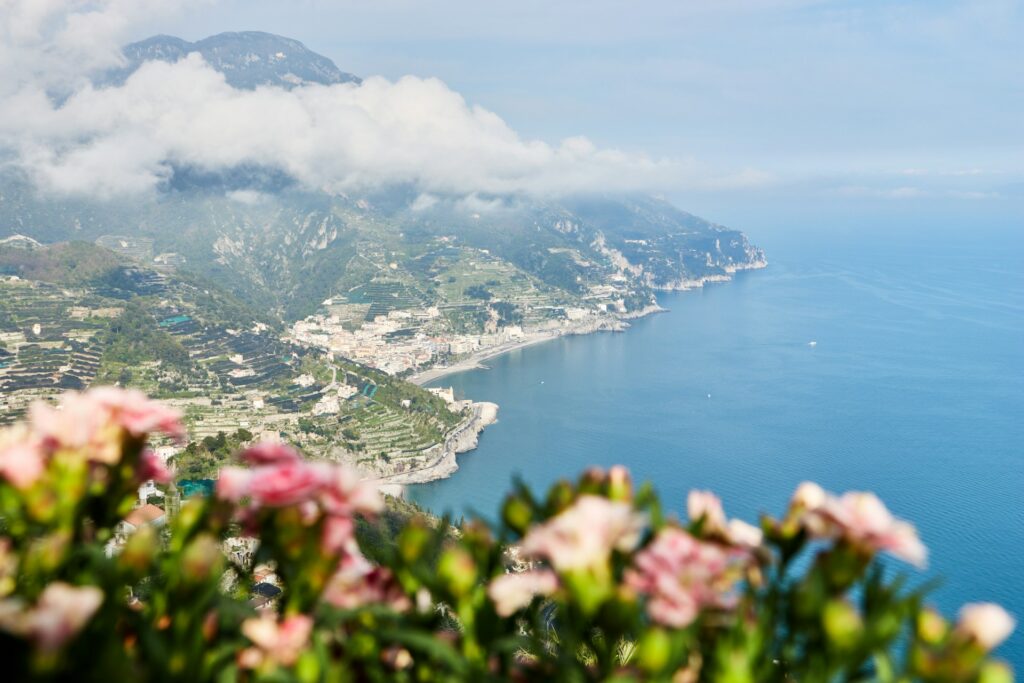
The terraces around Ravello are particularly important to the character of the landscape. Lemon groves occupy many of the lower and southern terraced areas, while vines are found higher up and on other slopes. Historic pedestrian roads lead from Ravello toward Minori and nearby settlements, crossing parts of this cultivated terrain.
Walking rather than driving reveals something easy to miss when moving between the two towns by road: Ravello and Minori are not isolated tourist destinations. They belong to the same vertical landscape. Paths once connected people living and working at different elevations, and those connections remain physically visible.
There is one practical reality to remember. On the Amalfi Coast, going down a staircase can be delightful; discovering that your return requires climbing it can be considerably less romantic. Plan the direction of your walk and your transportation afterward before setting out.
Your knees will appreciate the research.
Amalfi’s Hidden Stairways: You Don’t Need a Famous Trail
Some of the best walking on the Amalfi Coast does not require a named hike at all.
In Amalfi, simply turning away from the harbor and continuing uphill can reveal an entirely different town. Stairs rise behind the cathedral and through residential areas toward terraced slopes. The Via Maestra dei Villaggi crosses parts of Amalfi’s agricultural landscape, where lemon groves, vegetable gardens and vines occupy terraces above the town.
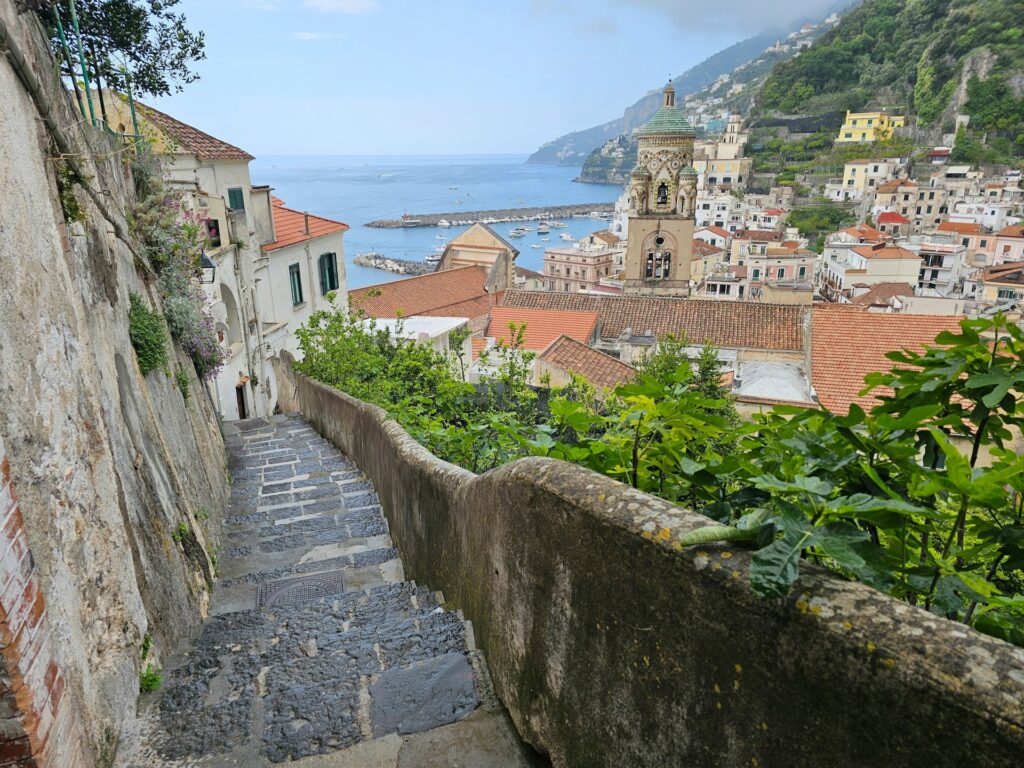
This is where wandering becomes useful.
The Amalfi seen from Piazza Duomo is compact, crowded and monumental. The Amalfi seen from its upper pedestrian routes is agricultural and surprisingly quiet. Look down and the cathedral’s roof and bell tower become part of a much larger composition of buildings, gardens, mountains and sea.
These smaller walks are particularly valuable for travelers who do not want to commit to a half-day hike. Twenty or thirty minutes of climbing can radically change the view. It can also show you how quickly the polished tourist center gives way to the ordinary geography of life on a mountainside.
You do not always need a trailhead.
Sometimes you just need to take the stairs everyone else is walking past.
Nocelle: Stay After the Hikers Leave
For many people walking the Path of the Gods, Nocelle is treated primarily as the finish line.
That is a mistake.
Nocelle is a historic hamlet of Positano positioned high above the main town, and its relationship with the mountains is precisely what makes it interesting. Before the modern coastal road changed transportation along this part of the peninsula, mountain paths and mule tracks were essential links between communities.
Arriving in Nocelle on foot therefore feels appropriate. You have approached it through the landscape rather than simply being delivered to it.
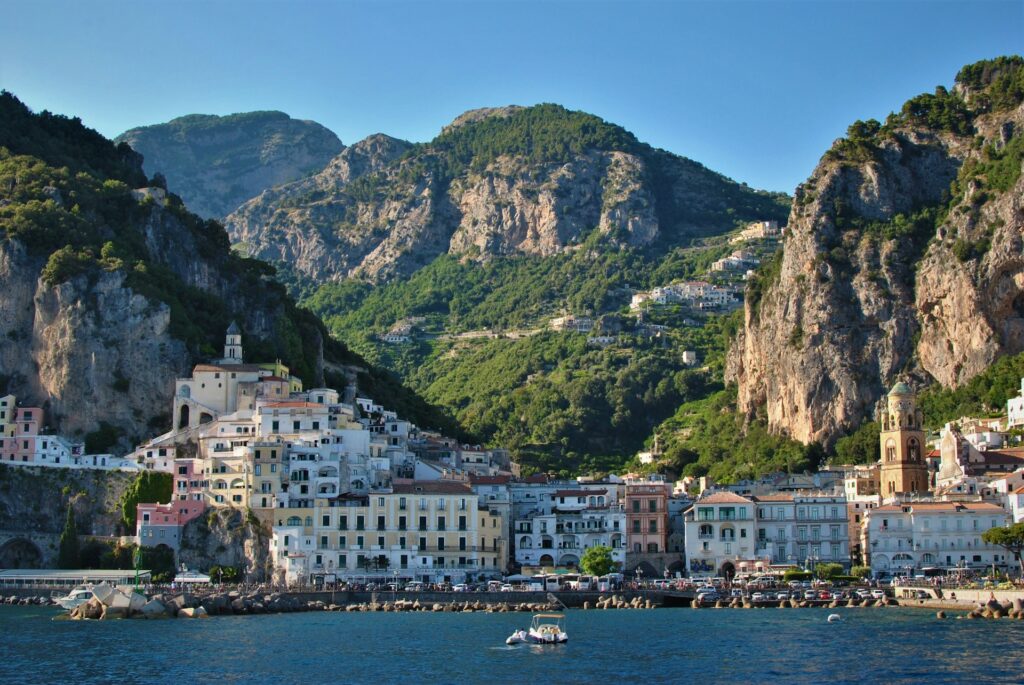
Instead of immediately rushing toward Positano, spend a little time walking around the hamlet. From this elevation, the famous resort below becomes part of the scenery rather than the center of it. The Mediterranean stretches beyond the mountains, and the scale of the vertical journey between upper settlements and coastal towns becomes obvious.
Nocelle demonstrates one of the central lessons of walking the Amalfi Coast: the places above the famous places can be just as revealing.
The Terraces Are Not Just Pretty
Once you begin walking the Amalfi Coast, you start noticing walls.
Thousands of them.
Dry-stone retaining walls create narrow agricultural terraces across slopes that would otherwise be extremely difficult to cultivate. In 2025, the United Nations Food and Agriculture Organization recognized the Amalfi lemon-orchard and terraced agricultural system as a Globally Important Agricultural Heritage System. The organization describes the terraces as part of a centuries-old adaptation to steep terrain, helping retain soil and regulate water while supporting cultivation.
Check Out: Where to Watch the Sunset on the Amalfi Coast
That makes walking through the terraces something more than an aesthetic experience.
You are moving through an engineered agricultural landscape.
The staircases, paths, irrigation systems, retaining walls and pergolas all belong to a system that allowed communities to produce food on steep mountainsides. Lemons are the most recognizable crop, but olives, grapes and vegetables also appear throughout the terraced landscape.
Seen from the sea, the terraces can look like decorative lines across a green mountain.
Walk through them and the labor becomes impossible to ignore.
Walking Changes Your Sense of Distance
On a map, Amalfi Coast towns can appear absurdly close together. Walking reveals why geography matters more than mileage here.
A destination may be only a kilometer away horizontally while hundreds of steps separate you vertically. A village visible across a valley may require a long descent followed by another climb. Two places that seem nearly adjacent can feel completely different depending on elevation.
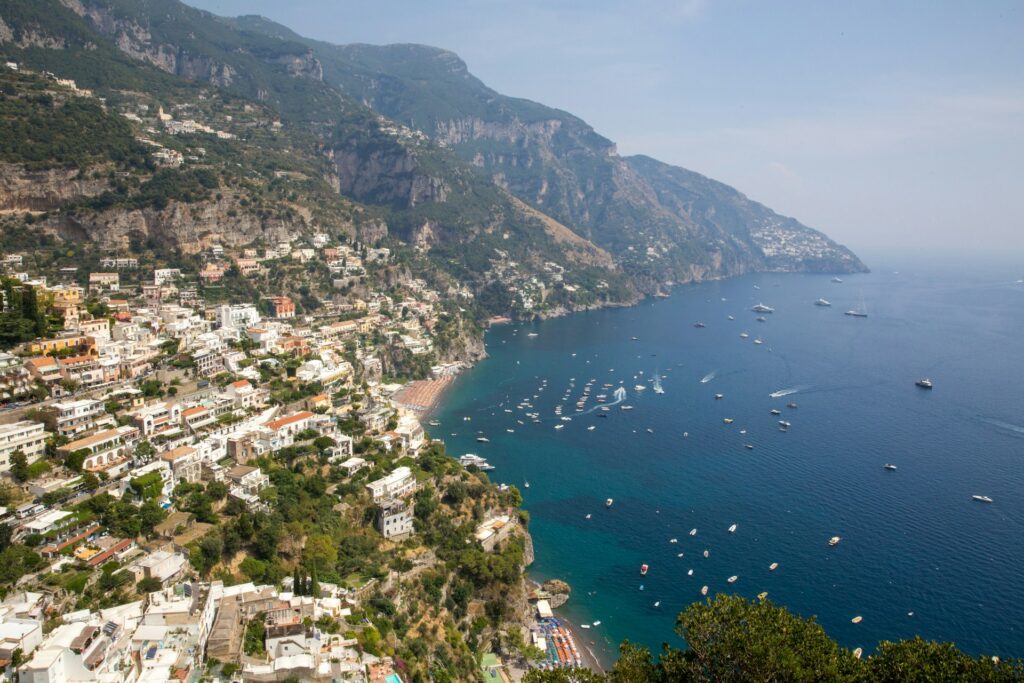
That is not an inconvenience to overcome. It is part of understanding the coast.
The mountains determined where people could build, where they could farm and how they could move. Modern roads and ferries have made travel easier, but walking restores the three-dimensional reality that maps flatten.
You begin measuring distance differently.
Not in miles.
In steps, elevation, shade, water and whether the village you can see across the mountain is above you or below.
The Best Way to Walk the Amalfi Coast
You do not need to turn an Amalfi Coast vacation into a hiking expedition to experience it on foot. One major hike and several smaller walks may reveal more than racing through a checklist of trails.
Walk the Path of the Gods if you want scale and spectacular coastal views. Choose the Lemon Path if you want to understand the agricultural landscape. Explore Valle delle Ferriere for water, vegetation and industrial history. Descend from Ravello if you want to feel the vertical relationship between mountain and sea. And wherever you stay, take at least one staircase or pedestrian lane simply because you do not know where it goes.
Good footwear matters. So does water. Heat, sun exposure, uneven surfaces and large numbers of stairs can turn an apparently short walk into something more demanding than expected. Trail conditions and access can also change, so current local information should always be checked before setting out on a longer route.
But do walk.
Because after you have traveled the Amalfi Coast by car or ferry, it is easy to remember it as a collection of spectacular towns beside the Mediterranean.
After you have walked it, you understand something different.
The paths are part of the reason those towns could exist in the first place.
Quick Answers
The Path of the Gods is the Amalfi Coast’s signature high-elevation hike, running between Bomerano in Agerola and Nocelle above Positano.
The Lemon Path connects the Maiori and Minori area through historic terraced citrus-growing landscapes and offers a closer look at the agricultural side of the coast.
Valle delle Ferriere provides a striking contrast to the exposed coastline, with streams, waterfalls, dense vegetation and remnants of Amalfi’s historic water-powered industries.
Ravello’s old pedestrian routes and stairways descend through terraced hillsides toward coastal communities including Minori, revealing how villages at different elevations were historically connected.
Amalfi Coast walks range from demanding mountain trails to short village stairways and pedestrian lanes, so travelers do not need to be experienced hikers to explore the region on foot.
Elevation matters as much as distance on the Amalfi Coast. A destination that looks close on a map may involve hundreds of steps or a significant climb or descent.
Supportive footwear, water and sun protection are important even on relatively short walks because stone steps, uneven surfaces and steep elevation changes are common.
Frequently Asked Questions
1. How long does the Path of the Gods take?
The classic Bomerano-to-Nocelle walk generally takes around three hours of actual walking, although stops, transportation and the onward journey from Nocelle can make it a half-day excursion.
2. Is the Path of the Gods difficult?
It does not require technical climbing, but portions are rocky, uneven and exposed. Travelers uncomfortable with heights should research the route carefully before choosing it.
3. Where does the Path of the Gods begin?
One of the most popular versions begins in Bomerano, a hamlet of Agerola, and proceeds toward Nocelle above Positano.
4. What is the best walk for seeing Amalfi Coast lemon groves?
The Lemon Path between the Maiori and Minori area provides a close look at historic terraced citrus cultivation.
5. Is Valle delle Ferriere near Amalfi?
Yes. The valley extends inland behind Amalfi and can be approached on walking routes from Amalfi or Pontone.
6. Can you walk between Ravello and the coast?
Yes. Historic pedestrian routes and stairways connect Ravello’s elevated landscape with lower communities including Minori.
7. Do you need to be a serious hiker to enjoy walking the Amalfi Coast?
No. Some of the most revealing walks are shorter village stairways, agricultural paths and pedestrian connections. The key is remembering that even short distances can involve substantial elevation changes.
Key Specifications
Destination: Amalfi Coast, Campania, Italy
Signature Hike: Path of the Gods — Bomerano/Agerola to Nocelle
Agricultural Walk: Sentiero dei Limoni — Maiori and Minori area
Nature and History Walk: Valle delle Ferriere — inland from Amalfi
Elevated Village Walk: Ravello toward Minori
Typical Terrain: Stone stairs, mule tracks, agricultural paths, rocky trails and paved pedestrian lanes
Major Considerations: Elevation, heat, sun exposure, uneven terrain, water and transportation from the end of one-way walks
Landscape Significance: The Amalfi Coast has been a UNESCO World Heritage cultural landscape since 1997
Expert Summary
Walking the Amalfi Coast reveals a landscape that roads and boats can only partially explain. Historic stairways, mule tracks and agricultural paths connect villages with the terraced slopes, mountain settlements and cultivated land that supported coastal communities for centuries.
The Path of the Gods provides the grandest perspective, while the Lemon Path brings visitors directly into the coast’s agricultural history. Valle delle Ferriere reveals a greener landscape shaped by water and industry, and old pedestrian routes around Ravello, Minori and Amalfi demonstrate how people navigated extreme differences in elevation long before modern transportation.
The most rewarding approach is not necessarily to complete the greatest number of hikes. It is to spend enough time walking that the Amalfi Coast stops looking like a line of beautiful towns beside the sea and begins to reveal itself as an interconnected mountain landscape built around paths, terraces and steps.
(Sources: UNESCO World Heritage Centre — Costiera Amalfitana; Visit Amalfi — Valle delle Ferriere and historic walking landscape)